.png)

An annual pause to think better about technology
On November 15 2025, we gathered at the Infosys Science Foundation in Bengaluru for the second edition of the T4GC Summit. The day brought together nonprofits, technologists, funders, and practitioners to sit with harder questions about technology and its place in social change. It became a space to reflect on what it actually takes for technology to take root to be adopted, sustained, and shared across the ecosystem.
Through candid conversations, fireside chats, and open dialogue, we heard from thoughtful voices across policy, funding, and practice who are reimagining how technology can support systemic change. The conversations moved deliberately beyond pilots, towards the quieter, more difficult work of building connected ecosystems that last.
What emerged over the day
Technology
adoption is often driven by anxiety, not readiness. Fear of being left behind pushes organisations faster than their institutional capacity, creating fragile systems from the start.
Trust
is distributed, not centralised.
It emerges through reuse, public maintenance, shared responsibility, and continuity, not through one-time deployments or vendor assurances.
Tools
fail because ownership and maintenance are under-built. The absence of baselines, documentation, and long-term responsibility matters more than technical quality. Maintenance is not a phase. It is ongoing work.
Data
abundance does not equal usable insight. Time, compute, and engineering decisions determine whether data can move fast enough to matter. Without these, even rich datasets remain inert.
Openness
and regulation are organisational choices, not technical defaults. Openness is cultural and legal, requiring early commitment and sustained effort. Regulation, meanwhile, evaluates security, reliability, and data responsibility, regardless of licensing models.
Interoperability
is shaped as much by incentives as by standards. Procurement, continuity, documentation, and the invisible labour of maintenance determine whether systems can actually speak to each other.

Notes from the Room
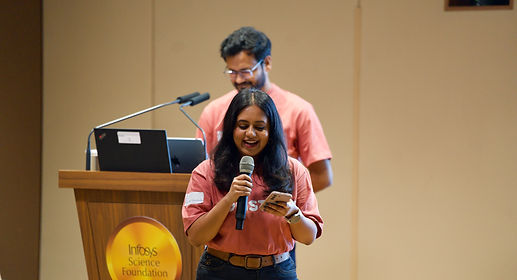
By the time the housekeeping notes began, the room was already full. People had arrived early, settling in for a Saturday spent talking about technology and people. Questions were invited, phones were silenced, while volunteers circulated quietly. Varshini framed the day as time set aside to think carefully about how technology shows up in the social sector, and what it takes for it to last i.e. to be adopted, sustained, and shared. The agenda moved in a deliberate arc, it began with organisational reality, shifted to shared infrastructure and then to the question of data that can be used in time. From there the conversation turned to privacy and laws that govern such data, segued into a student hackathon showcase, and finally returned to the hard work of interoperability.
Kandid with K
The first session opened with Kailash Nadh, CTO Zerodha, in conversation with Prashanth from T4GC. The tone was candid from the start, lightly irreverent, and then quickly serious, because rather than beginning with tools or trends, the discussion stayed close to organisational reality, where tech is rarely a blank slate and almost never a clean decision.


He described the wide range of technological capacity across nonprofits, from small teams relying on off-the-shelf tools to larger organisations attempting to build custom systems. For many teams, the first reason to “do tech” is not clarity but anxiety, about being left behind, being judged by funders as outdated and the nagging thought that if everyone else has a dashboard, maybe they should too? And once that anxiety is in the driver’s seat, things move fast.
This trend, he noted, has real consequences. Many organisations make significant investments without having the internal baseline required to evaluate what is being proposed. Vendors fill the gap. Timelines and costs are accepted without a way to judge their reasonableness. Decisions are made in isolation, and responsibility for long-term maintenance remains unclear.
As the conversation opened up, practitioners in the room began to add their own experiences. A founder working in the women’s entrepreneurship space spoke about reaching a point where technology finally felt necessary, and the questions that followed about what to open, what to share, and how others might reuse the work. This led to a deeper discussion on open source, compliance, and regulation.
Kailash’s response cut through some of the more common misconceptions. Regulation does not care whether your stack is proprietary or open, he insisted, it cares whether you are secure, reliable, and responsible with data. He spoke about licensing as the real open source specific concern, and then shifted back to the sector reality. If you are collecting data, compliance can feel like a headache, especially with new rules coming in.
What landed was his description of how systems become trustworthy. High quality open source reduces certain burdens precisely because it is used at scale and maintained in public, with updates arriving continuously. Security does not become one person’s lonely job. It becomes distributed work.
The distinction between proprietary and open systems, it became clear, matters less than the quality of the underlying infrastructure. Well-maintained open systems often reduce security and compliance burdens, precisely because they are used and tested at scale.
The conversation then opened outward into the audience once again. Questions around discoverability followed.
While many tools exist, organisations struggle to find them, assess their relevance, or adopt them meaningfully. Attempts to catalogue solutions digitally have repeatedly stalled, not due to lack of supply, but due to the absence of enabling support.
The issue of capacity was highlighted through another question from the conservation sector. Custom systems are often built by individual vendors or single team members. A few years later, when those people move on, maintenance becomes impossible. Documentation is absent. Organisations are left with systems they cannot safely change or extend.
In response, the idea of fractional technology leadership surfaced as a pragmatic alternative. Advisors who work across organisations, offering guidance without requiring full-time teams, and helping decisions stay grounded in organisational rhythm.
The session ended without a single neat takeaway, but definitely with a clearer understanding of what the sector lacks when it comes to technology: baselines to build from, support to carry ideas through, and shared points of reference that make adoption possible.
Decentralisation
of trust

Tech as Infrastructure
The conversation then moved into something more embodied. How decisions have to be made early, when the size/scale of the system remains unknown.
Suman Vijeta, Associate Director, Pratham Book spoke about StoryWeaver and the shift from being “a platform” to becoming something closer to public infrastructure.
The question was framed carefully by Akanksha, moderating the panel. If StoryWeaver began as a publishing platform and grew into shared infrastructure, what did it take to design for openness from the start, as an organising posture.
Suman’s answer did not treat openness as technical. She treated it as cultural, legal and relational. In Pratham Books, openness is not a feature, it is a way of working. She described the legal layer first, which is often where openness becomes real or collapses. StoryWeaver stories and illustrations are released under a Creative Commons licence, which means authors and illustrators agree to let go of conventional copyright ownership which is to say that negotiation, values, and trust, are held over many years.
The texture here mattered, because it made a point that is more often than not, easy to miss in tech conversations. Open systems do not scale on idealism. They scale on agreements and maintenance and the intentional work of making reuse “normal”.


Vinay, Vice President, Zerodha Tech, held a counterpoint to the fear driven tech adoption that came up earlier. StoryWeaver did not grow because someone panicked about falling behind but because reuse was treated as the goal, and the system was built to be embeddable, accessible, and designed for the world it was meant to serve, including constraints that do not show up in product demos.
Policy, platforms, and the problem of scale
Discussions on scale and governance brought in perspectives from policy and implementation. Anwesha Sen, Assistant Program Manager, The Takshashila
Foundation and Shailiza Mayal, Senior Manager, Samagra, spoke about the challenges of building technology within government systems. While policy intent around open source and shared platforms exists, capacity gaps and procurement cycles often undermine long term sustainability.
Examples from state level implementations illustrated both the promise and fragility of public digital infrastructure. Systems are rebuilt repeatedly across departments and states, often duplicating effort and cost. Documentation is neglected. Knowledge is lost during transitions. The conversations made visible the gap between policy aspirations and on ground realities, and reinforced the need for standards, continuity, and institutional memory.

The State of India's Birds
When data becomes usable, not just abundant
From shared infrastructure, the day moved to data at scale through a showcase of the State of India’s Birds (SoIB). The report is a collaborative effort bringing together ecologists, conservation policy makers, funders, and governmental and non-governmental organisations. Released once every four years, with annual updates on conservation status, SoIB draws on existing bird data to build a national understanding of species distribution and endangerment risks.
What stood out immediately was that the room did not need more jargon but a translation without dilution. Shashank, Senior Research Fellow at the Nature Conservation Foundation, delivered exactly that. The numbers he shared were staggering. Early editions of the report drew from roughly 10 million observations contributed by around 15,000 birdwatchers. By 2025, that scale had expanded to nearly 70 million observations from close to 60,000 contributors. Yet this was not framed as a triumph of data accumulation. The question that lingered was more uncomfortable: could the data move fast enough to remain useful?
At a national scale, analysis runtimes had stretched to three or four months, even on high-performance computing clusters. Cloud infrastructure was explored, but the team lacked the in-house competence to use it effectively. Annual updates became difficult not because data was missing, but because time and compute had become bottlenecks. Ecologists are deeply fluent in statistical analysis, but large-scale data processing demands a different layer of technical expertise.
The second half of the session revealed how this impasse was resolved. Sree Kumar joined the SoIB team to rebuild the technical backbone of the report. In a pre-recorded video, he traced how the runtime was reduced from four to five months to just five days. The shift did not rely on exotic tooling or expensive infrastructure, but on FOSS principles, simplicity, code optimisation, and a return to core computer science fundamentals.
Because the SoIB codebase was open source, Sree was able to understand the research, datasets, and logic quickly. One of the first breakthroughs was reducing memory requirements—from 64GB to 16GB—immediately lowering costs and compute dependency. Analysis jobs were then partitioned and horizontally scaled across laptops, desktops, and a mix of local and cloud servers. Sree described this approach as “crowd computing.” Instead of layering new software abstractions to save developer time at the cost of efficiency, the team leaned on stable, time-tested architectures. Powerful servers were reserved only for the most complex tasks, while routine analyses ran seamlessly across modest machines, even at the level of individual states.
This reframing opened up a larger possibility. Over 60,000 people already contribute birding data using their phones, effectively supercomputers in their pockets. At scale, this represents a vast pool of voluntary, distributed computing power embedded within an already engaged community. More importantly, it closes a loop: citizens who generate the data can directly access and use the insights it produces. Such an approach does not merely make the system faster or cheaper; it invites birders into the technological and analytical life of the project itself, creating new pathways for participation in code, research, and conservation.
In the end, the story was about designing systems that respect both ecological rigor and practical constraints and ensuring that knowledge moves quickly enough to matter.

A few key insights
Large scale observation projects can become victims of their own success. Contributions grow. The dataset becomes extraordinary. And the analysis becomes so slow that the insights arrive late, when the field has already moved on.
Where does capacity sit when data becomes huge. Is it with the people who know the ecology, or with the people who have compute, or with the people who can optimise pipelines. And what happens when those are not the same people.Data then, does not automatically become insight. It becomes more work.
The turning point for Shashank and team came through engineering work that made the same analysis dramatically more efficient. Code was reworked. Memory management improved. What once took months came down to around 33 hours, sometimes runnable even on personal laptops. That shift changed what was feasible. It brought timeliness back into the picture and allowed insights to stay closer to the field.
Reinforceing a recurring theme of the day that impact does not always come from more data, or more features. Sometimes it comes from making the existing thing usable in time, by the people who need it.
What’s been steaming at T4GC
We shared what we have been building and learning at T4GC. The session began with a small moment of silence, offered half seriously and half jokingly by Akhila, for the tech heartbreaks many in the room had lived through. Free licenses that did not serve teams. Free credits that ended just as things started working. Tools that forced organisations to bend their processes to fit someone else’s assumptions. Money spent on systems that did not hold.
Then came the counterpoint. Despite all of it, people are still building. Still trying. Still showing up. The question shifted from why things break to how the script might change.
Akhila & Praveen spoke about our way of working at T4GC. Trust and trial. Small experiments. Ongoing debates about whether to build at all. Short cycles of testing, learning, and revisiting decisions. Out of this work emerged IdliStack, named after the humble idli because it is simple, familiar, and easy to digest. The metaphor is playful, but the intention is serious. We did not set out to build yet another fancy tool. We wanted to build shared infrastructure that the sector could build on, lean on, and make its own, so we stop reinventing the wheel, once and for all.
We named the constraints plainly. Budgets that stretch thin. Tech expertise that is constantly being juggled. Too many roles per person. Tools designed far away from sector realities. And yet, the room felt steady in that moment, because speaking the unembellished truth is often what makes a path forward possible.
Data privacy and AI, and the uncomfortable questions
Post lunch, the room returned for a fireside conversation between Vidya & Venkatesh Hariharan, India Representative, Open Invention Network, on data privacy and AI, and it was treated as something already shaping power, governance, and everyday risk and not something conveniently rather hopefully cast into the future.
One thread was about agency. If AI is built entirely through proprietary systems, India risks becoming a consumer of rules written elsewhere. Open source AI was described as one possible paradigm shift, especially for building systems that are India centric and resilient. And then the other side of that sentence arrived quickly. Underfunding. The scale of investment elsewhere. The risk of becoming dependent on APIs that can be turned off. The surveillance concerns are baked into what gets fed into models.
Personal data came up directly. DPDP was referenced as having “come through yesterday” in the morning session, and it returned again here in the context of what it will mean for teams handling personal identifiable information, especially when AI systems touch education, health, and welfare workflows.
This conversation also widened beyond individuals. It looked at systems as demand and supply. Strengthening communities so they can demand accountability is one part. But if institutions on the supply side cannot handle that demand, it creates friction and erodes trust. Capacity building cannot be one sided. Preparedness has to be built in parallel.
The tone here was not alarmist or celebratory, it was surefooted, This chat was probably our attempt to familiarise ourselves with the power dynamics we are already living inside. Forewarned is forearmed, like they say.

Tech4SocialGood Hackathon
Alongside the main programme, the day carried the energy of students who had spent time building for a real organisation.
This section was opened by Yashaswi from OASIS, who introduced the hackathon and spoke about OASIS’s role in the sector. She described it as work that sits between nonprofits and technologists, creating the conditions for young builders to engage with real problems, real constraints, and real users, rather than abstract briefs.
The hackathon showcase was introduced as a collaboration between T4GC, FOSS United, and OASIS, with the intent of bringing nonprofits and technologists together to solve real world challenges using open source tools that are affordable, adaptable, and built to last. The pivot to students was driven by an idea to open up the solutioning of NPO challenges to young coders instead of restricting it to technologists.


Out of 116 registrations, 25 teams made it through to final submissions. The winning team, supported by Samagata Foundation, showcased work that prioritised clarity, maintainability, and openness over novelty.
The story of how the problem was understood mattered as much as the solution. Before building, there were field visits and conversations and partner check ins and the small decisions that shape what a tool becomes.
Benoy Stephen, the founder of Y Ultimate was introduced as someone embodying the spirit of the hackathon, and the space between defining a problem and designing a solution was treated as the real work.
Then the operational details arrived, and they were not small. A T4GC built hackathon management system helped manage 107 teams and 325 students, streamline logistics, coordinate partners, and keep the process transparent. It was also stated clearly that it would be open source and available on IdliStack.
The winning team, Team Algorithm described the problem statement as not just a brief, but a detailed document shared by T4GC with features, expectations, and priorities
The hackathon showcase made a case for a pipeline. Students are learning to listen. To translate human stories into accessible technology. To build with constraints instead of fantasies.

Interoperability and the work of making systems speak
Moderated by Vidya, final panel returned to the Summit’s core theme, data interoperability and shared infrastructure. And the conversation resisted easy answers. Because interoperability is not only about standards. It is also about power, incentives, documentation, continuity, procurement, and the parts of the ecosystem that quietly fail when no one owns maintenance.There was a clear critique of the rush to build “AI everywhere” without repairing the foundations inside departments and organisations. The point was made bluntly that public money gets wasted when foundational systems are broken but attention keeps chasing the newest layer.

Tanya Kak, Portfolio Lead for Climate and Environment at Rohini Nilekani Philanthropies, spoke about intent rather than outcomes. She framed the Summit as a place to examine the invisible foundations of collaboration: the infrastructure, incentives, and shared norms that determine whether technology can travel beyond a single organisation or pilot, essentially, she was asking us to develop an understanding of what allows it to compound.
From there, the discussion moved into what scaling looks like inside government systems, and why it is so fragile. The story included examples of using open source building blocks like ODK and Metabase, and how RFP( Request for Proposals) language can be used to require that vendors maintain code and modules in the open. It also surfaced the hard part. Government changes. Vendor cycles end. Documentation is neglected. Handover breaks. The same platform gets rebuilt again and again across states and departments, and even when code is shared, adoption does not automatically follow.
The panel also named infrastructure beyond software. Bharath Pallavi, Co-founder, Tarkam, highlighted issues of digital connectivity, power, and low latency networks. The fact that much of social sector work happens outside tier one cities, where bandwidth and reliability are not guaranteed. The metaphor of highways and roads returned, not as a flourish, but as a reminder that shared digital systems need physical conditions to function.


As the day drew to a close, Hazel took the room through its final breath, with a thank-you echoed by everyone here at T4GC. She spoke to the energy people had brought into the space, the conversations that carried beyond sessions, and the generosity of those who shared their work openly. Gratitude extended to partners, volunteers, students, funders, and the many hands that held the Summit together. The room was reminded that this work does not end on a stage and that we don’t need tech to just help us, but to keep up with us.
Supported by